 < Back
Precision oncology in Europe: real progress, uneven access, and a roadmap to equity
A commission report on precision oncology was recently published in The Lancet Oncology. The report estimates that 7-8 million people with cancer worldwide need molecular testing annually as part of standard of care. Yet, 4 out of 5 eligible patients do not receive the biomarker testing they need.
Alongside the commission report, a major review in The Lancet Regional Health – Europe shows that precision oncology is steadily becoming clinical reality across Europe. The review maps precision oncology implementation across more than 20 European countries and brings together insights from more than 150 leading experts and describes how precision oncology is evolving across diverse European health systems. The first author is Live Fagereng whereas Kjetil Tasken is the last and corresponding auths.
Three findings stand out:
📌 Pathways across Europe are more alike than assumed.
📌 Public investment is doing the heavy lifting.
📌 Europe has a structural advantage.
📢 The critical barrier now is not testing but treatment: access to matched therapeutic alternatives, especially for patients with rare cancers, is what most limits further progress.
The authors set out three implications for policy and health systems:
📍 Build a learning healthcare system for precision oncology.
📍 Align trials, reimbursement and implementation.
📍 Match priorities to the maturity of the evidence.
These recommendations echo, at regional scale, the global roadmap set out in The Lancet Oncology Commission on Cancer Genomics and Precision Oncology, published in parallel, which calls for value-based, resource-stratified implementation frameworks, a system-readiness assessment tool, and monitoring and evaluation frameworks to guide precision oncology worldwide.
“What stood out to us is how similarly precision oncology is now organised across much of Europe. Molecular tumour boards, reimbursed diagnostics, and pathways to targeted therapies are in place in many countries.The unfinished business is making sure patients receive the right matched treatment at the right time, and this gap is most acute for people with rare cancers,” said first author Dr Gro Live Fagereng, Oslo University Hospital, project manager of PRIME-ROSE and Lead of Network Activities in EUnetCCC.
“Europe’s universal health systems, common regulatory frameworks, and strong cross-border research networks give us a real strategic advantage,” said corresponding author Professor Kjetil Taskén, Head of Institute for Cancer Research, Oslo University Hospital and Coordinator of the EU Cancer Missionproject PRIME-ROSE. “If we build precision oncology as a true learning health system, grounding in real-world data and adaptive decision-making, equitable access stops being a slogan and becomes part of how we run cancercare every day.”
Download the press release below.
Read the The Lancet Regional Health - Europe review
Read The Lancet Oncology Commission report
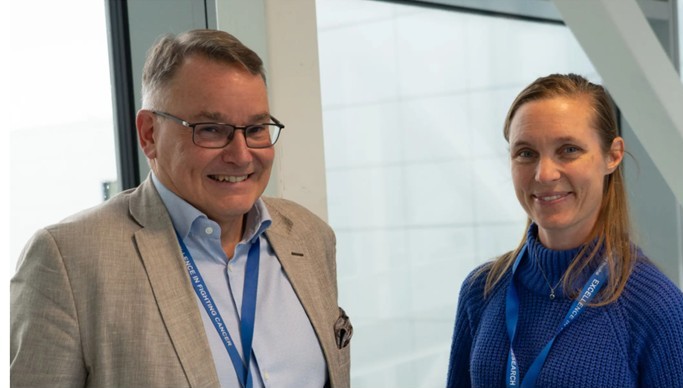
Photo: Kjetil Taskén and Live Fagereng, both Oslo University Hospital. Photo credit: Iselin Rønningsbakk, Oslo University Hospital