 < Back
PRIME-ROSE at ESMO 2026: Turning Cross-Border Collaboration into Clinical Evidence
Madrid,Spain | 23–27 October 2026
The ESMO Congress 2026 brought together the international oncology community in Madrid and provided an important platform for PRIME-ROSE partners and collaborating precision oncology trials to share new clinical, scientific and policy-related findings.
A particular highlight for PRIME-ROSE was the presentation of merged patientdata from four European precision oncology trials, demonstrating in practice how collaboration across national studies can generate stronger evidence for molecularly defined patient groups.
A PRIME-ROSE collaboration across four national trials
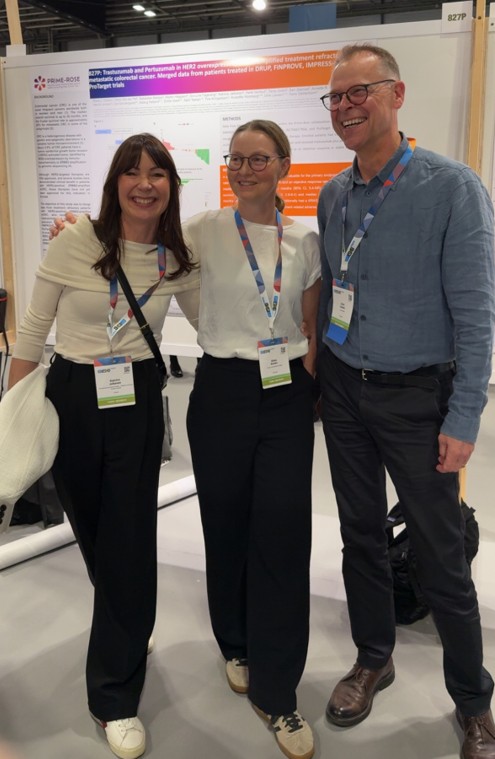
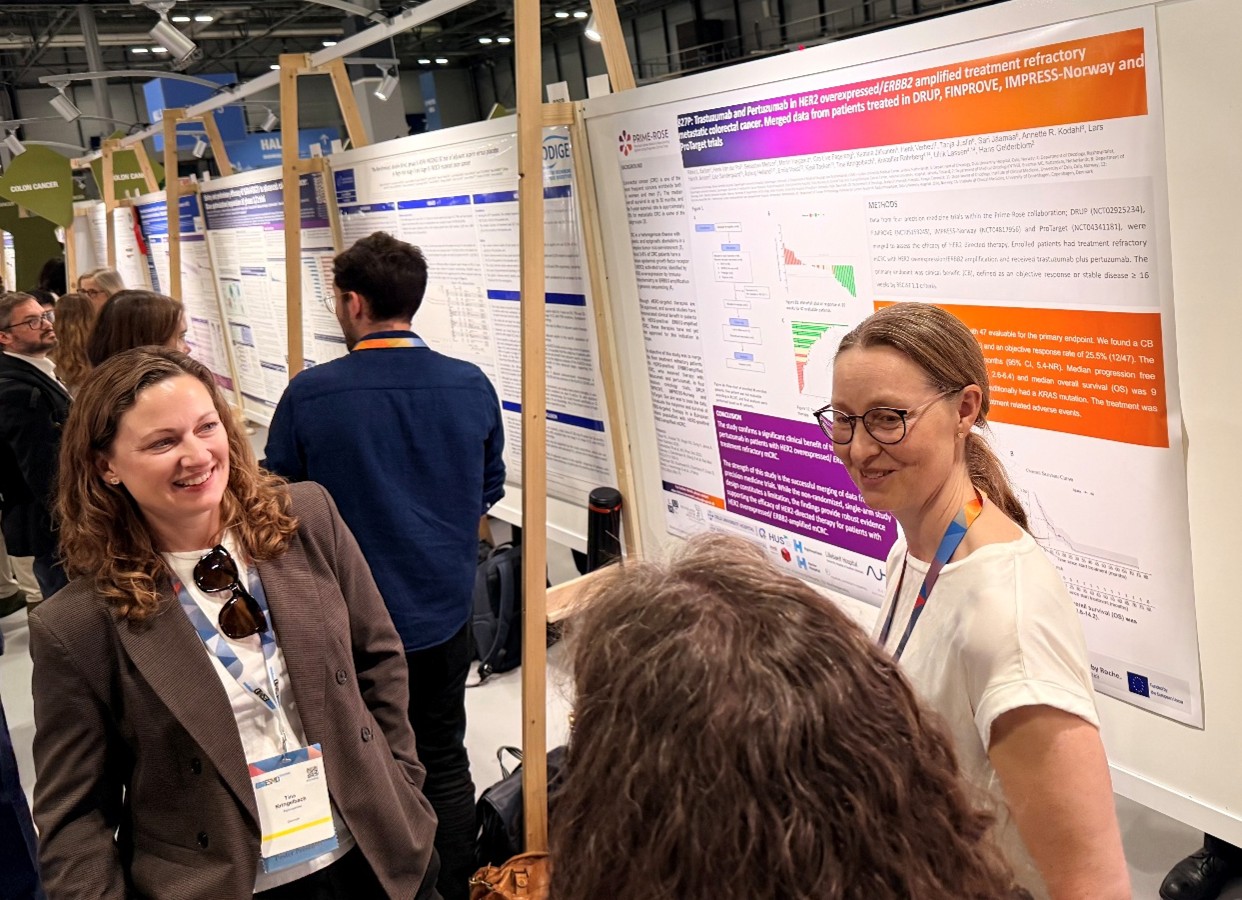
827P – Trastuzumab and pertuzumab in HER2 overexpressed / ERBB2 amplified, treatment refractory metastatic colorectalcancer: Merged data from patients treated in the DRUP, FINPROVE, IMPRESS-Norway and ProTarget trials.
Presented by Rikke L. Eefsen, the analysis brought together patients treated within four national precision oncology studies: DRUP in the Netherlands, FINPROVE in Finland, IMPRESS-Norway in Norway and ProTarget in Denmark.
The cohort included patients with treatment-refractory metastatic colorectal cancer whose tumours were characterised by HER2 overexpression or ERBB2 amplification and who received the HER2-targeted combination of trastuzumab and pertuzumab.
Importantly,the presentation illustrates one of the core ambitions of PRIME-ROSE: connecting national precision oncology trials so that data can be analysed across borders rather than remaining within individual studies.
This is particularly valuable for molecularly defined patient populations, where the number of eligible patients within a single country or trial may be limited. Combining compatible data across studies can help build evidence that would be difficult to generate from individual cohorts alone.
For PRIME-ROSE, the collaboration therefore represents more than an individual clinical analysis. It provides a concrete example of how a European network of precision oncology trials can enable collaborative evidence generation for individualised cancer care.
A strongportfolio from the PRIME-ROSE community
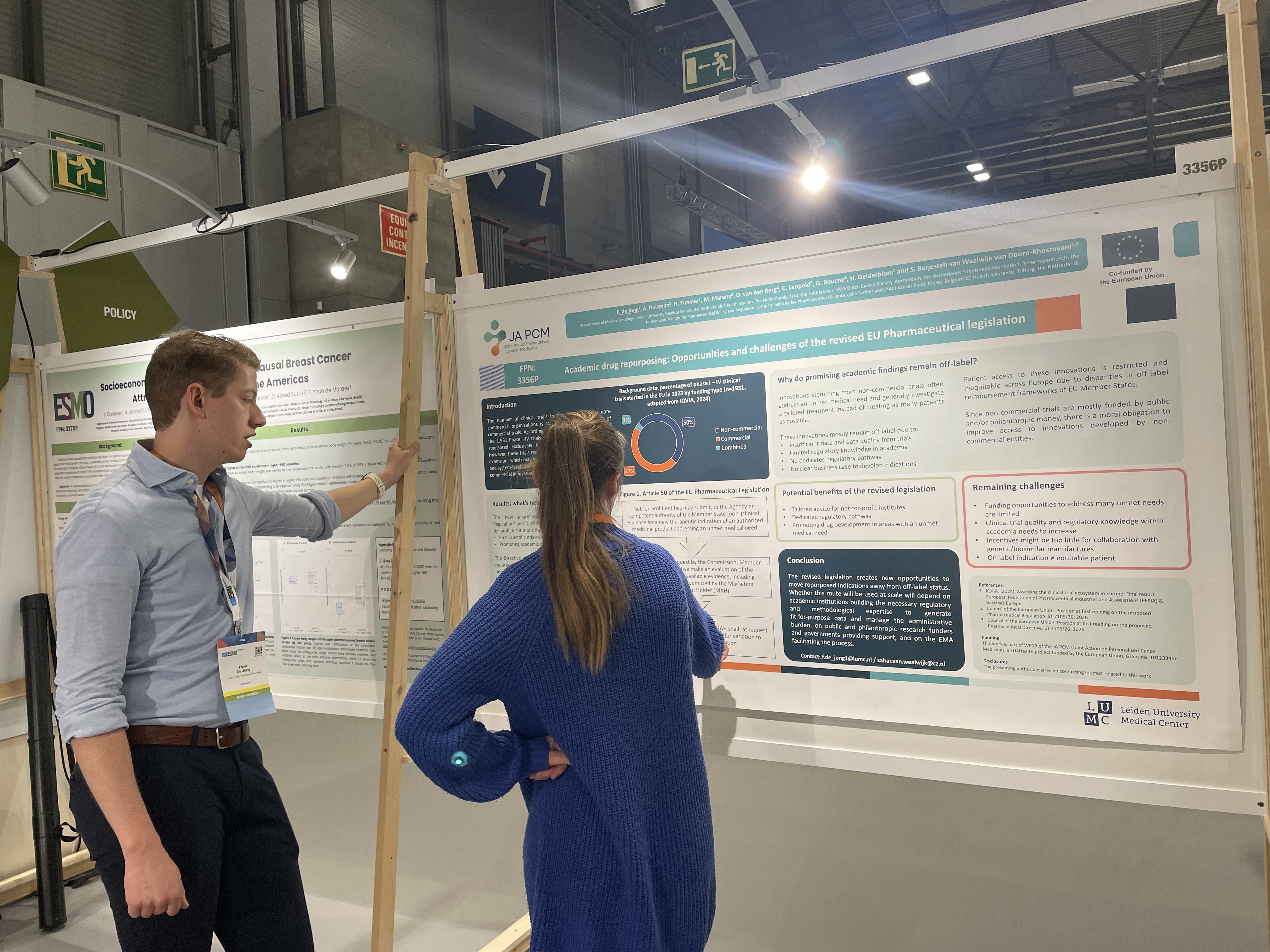
The collaborative analysis was presented alongside several other contributions from PRIME-ROSE partners and related European initiatives at ESMO 2026.
The scientific programme included findings from national precision oncology trials, including DETERMINE, DRUP, FINPROVE, IMPRESS-Norway and ProTarget, covering molecularly matched treatments across different tumour types and targets.
Presentations highlighted:
- tumour-agnostic treatment with alectinib in DETERMINE;
- panitumumab treatment outside its conventional indication in DRUP
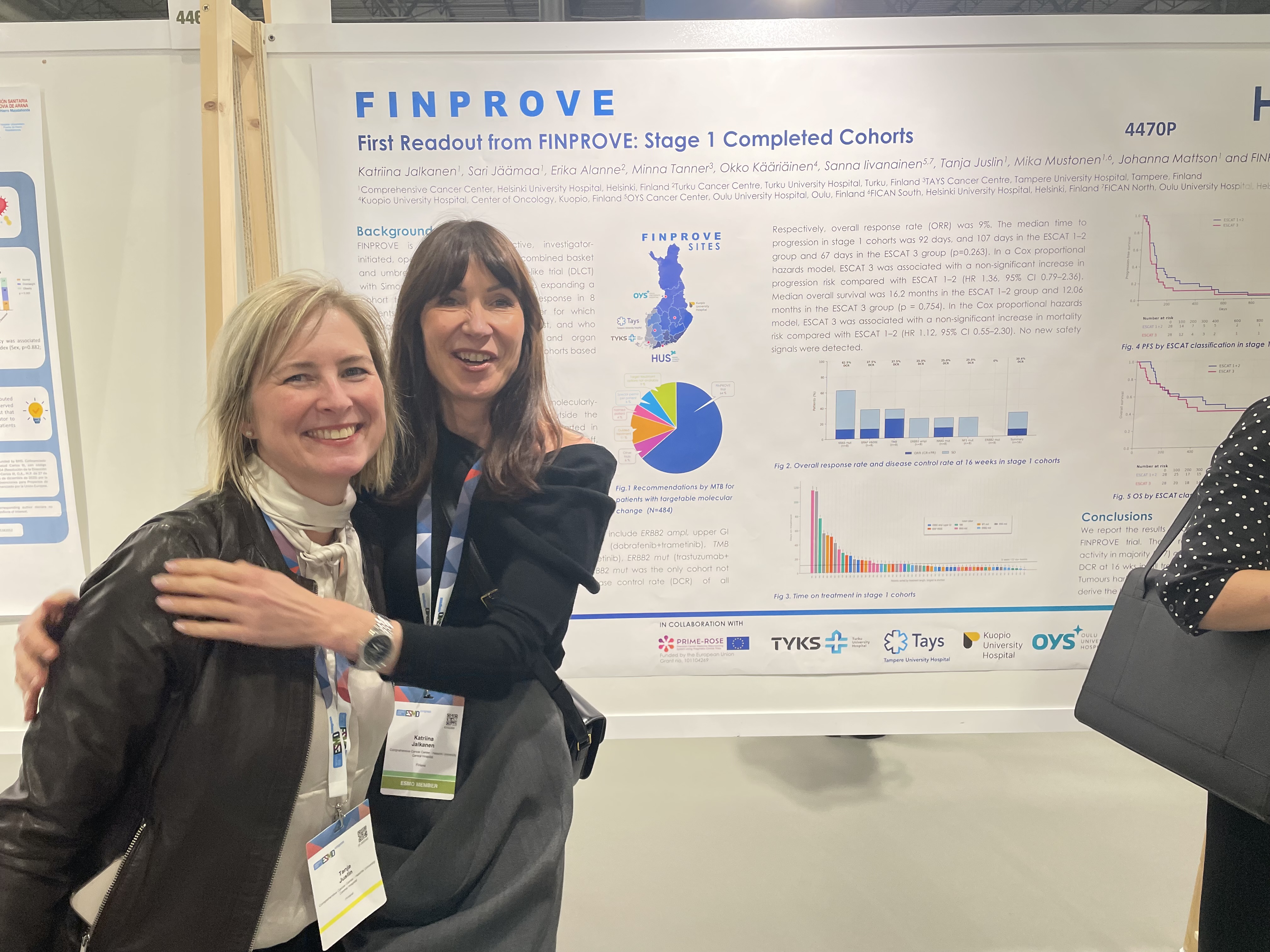
- the first readout from completed Stage 1 cohorts in FINPROVE;
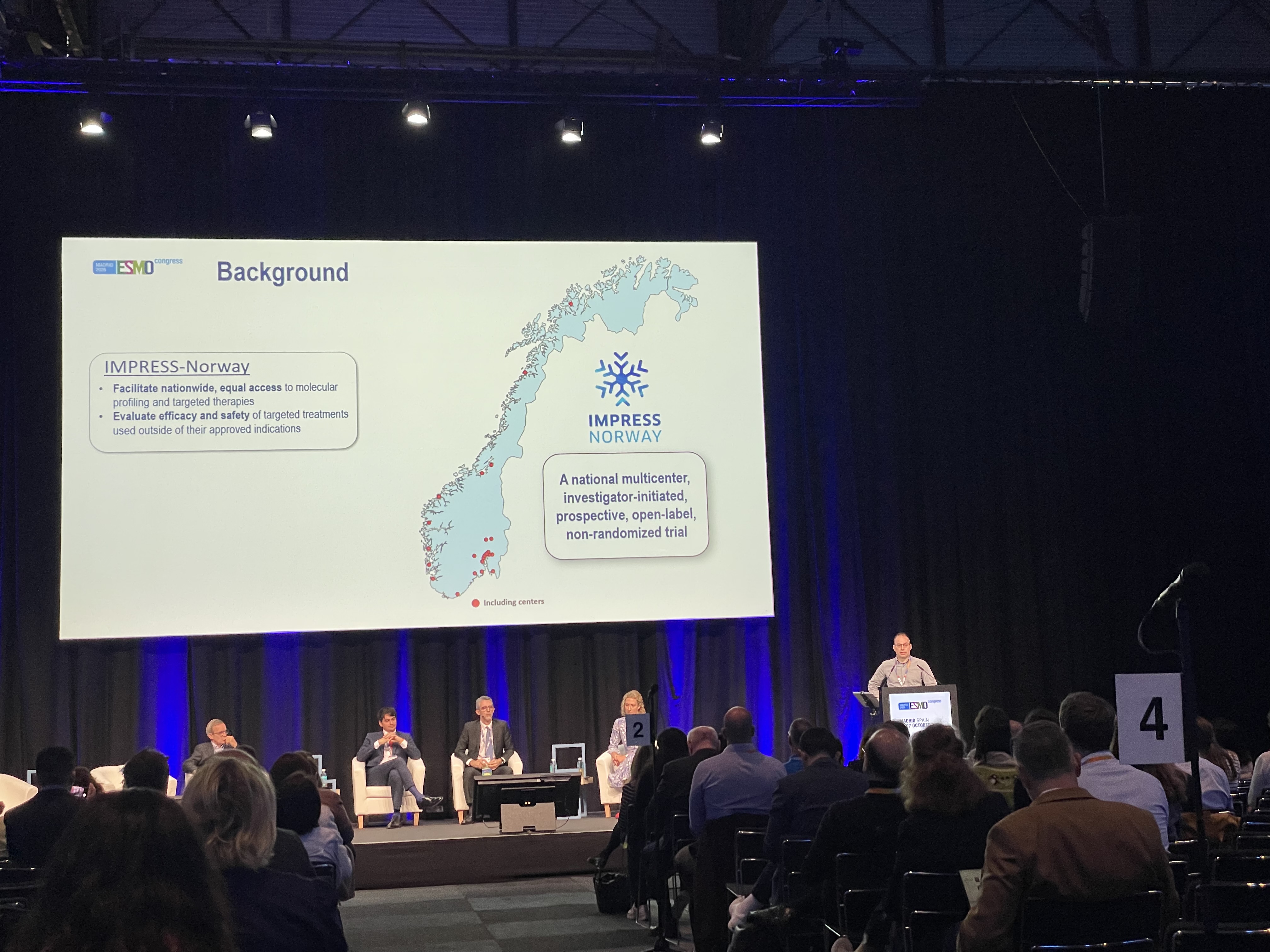
- clinical benefit from matched targeted therapies in patients with CNS tumours in IMPRESS-Norway;
- results on niraparib and BRAF/MEK inhibitors from ProTarget.
Together, these contributions demonstrate how precision oncology requires not only molecular testing and access to targeted therapies, but also comparabledata, shared methodologies, sustainable regulatory pathways and collaboration across national healthcare and research systems.
From national studies to European evidence generation
The presentations at ESMO 2026 reinforce an important message for PRIME-ROSE: collaboration can turn individual national studies into a broader European evidence-generating ecosystem.
By connecting study data with compatible molecular and clinical data, researchers can investigate patient populations that may otherwise remain too small for meaningful analyses within individual national trials.
Thistype of cross-border evidence generation is central to PRIME-ROSE's vision of making individualised cancer care more accessible, evidence-based and sustainable across Europe.
ESMO 2026 provided another important opportunity to share this work with the wider oncology community and to strengthen the collaborations needed to translate molecular discoveries and clinical data into better treatment opportunities for patients.

Image Gallery